

Rhinoplasty in Istanbul
Rhinoplasty Guidance in Istanbul
Whether primary or revision, rhinoplasty planning starts with understanding your goals, your medical history, and what is realistically possible. I help you prepare for a preliminary review and coordinate the practical steps of your treatment journey in Istanbul.

Understanding Rhinoplasty Planning
Rhinoplasty is surgery that can change the shape of the nose and, in some cases, address functional concerns. Planning is individual because facial proportions, nasal structure, skin, and previous surgery can all affect what may be appropriate.
- Individual Planning — Every nose and goal is different; planning is always personal.
- Surgical Assessment — Suitability and the surgical plan are decided by the treating surgeon.
- Personal Coordination — One point of contact for communication, planning, and practical guidance.


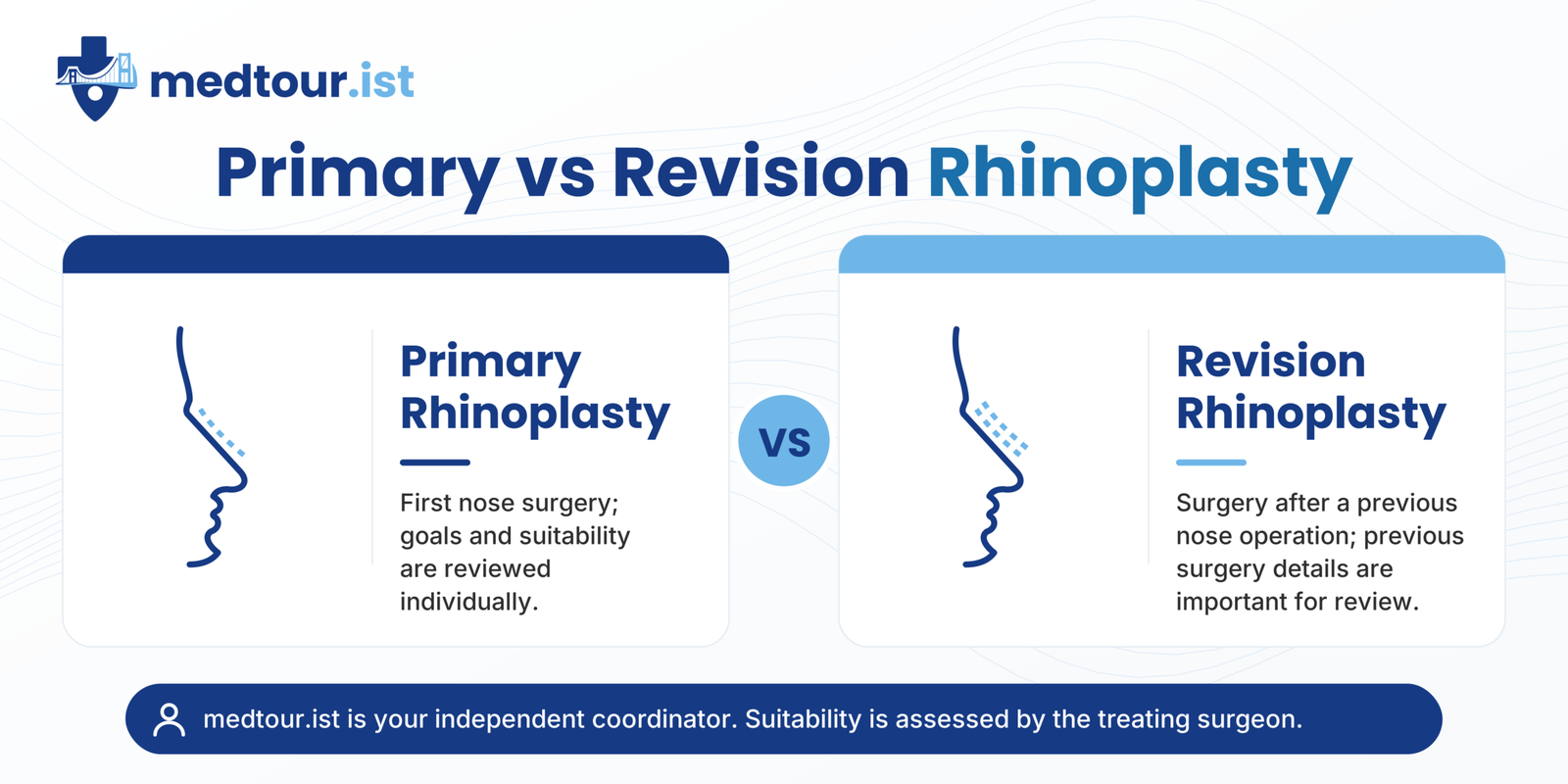
Primary or Revision Rhinoplasty?
The main paths you may discuss. Final suitability is always confirmed by the treating surgeon.
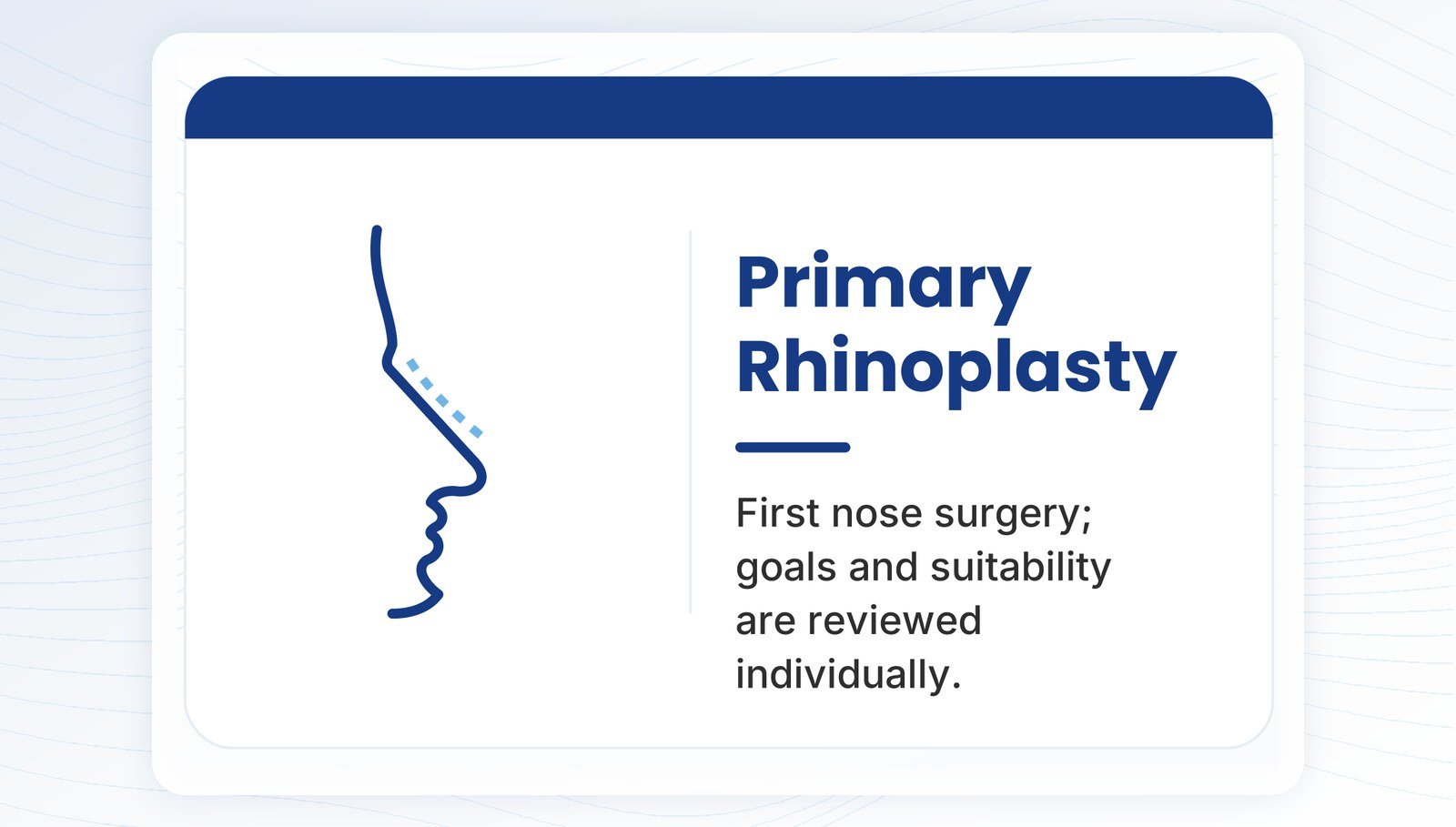
Primary Rhinoplasty
Your first nose surgery. During planning, the surgeon may consider your goals together with the existing shape, proportions, and function of your nose.
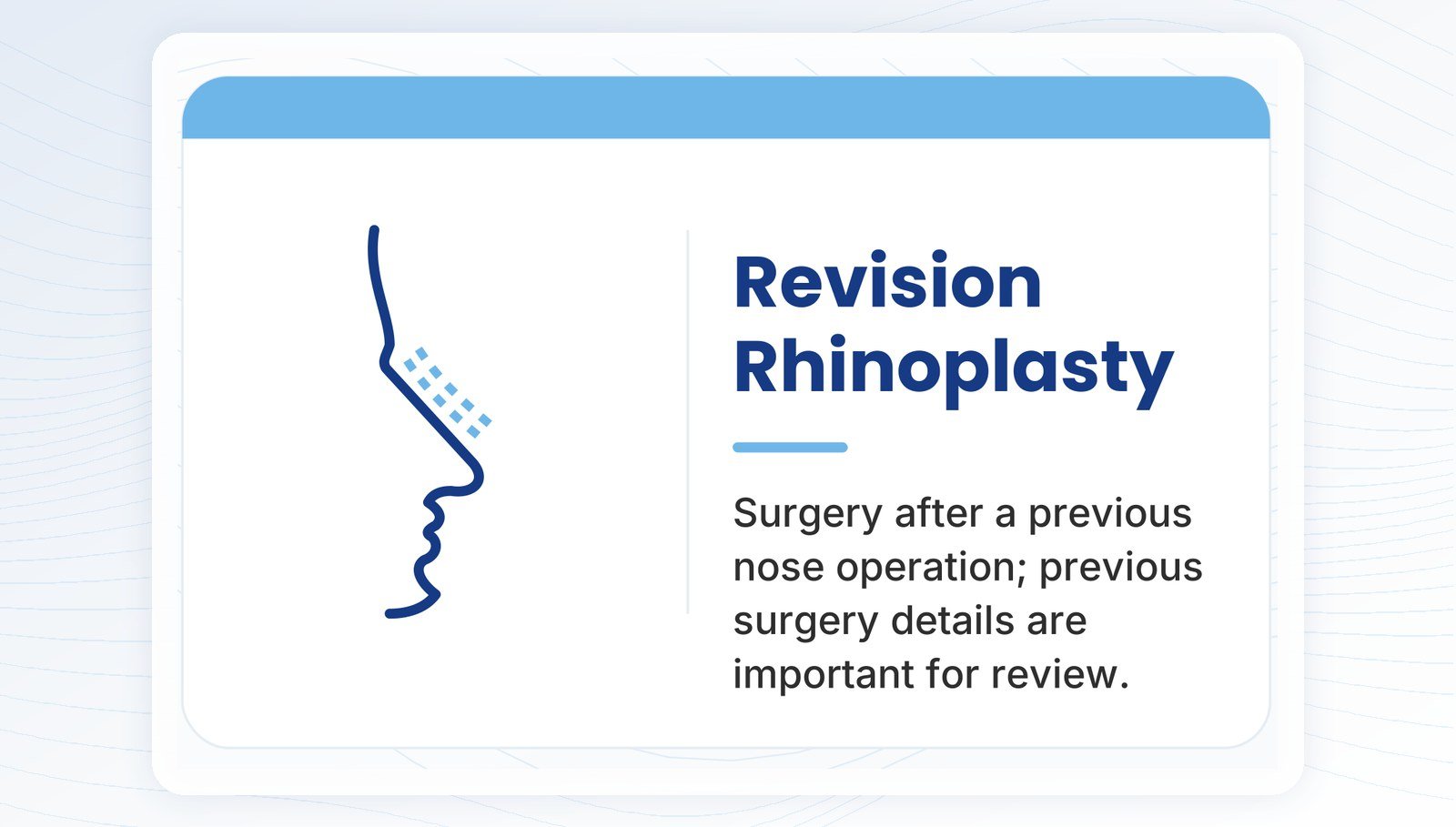
Revision Rhinoplasty
Surgery after one or more previous nose operations. Previous surgery can change the underlying anatomy, so earlier operative details and your current concerns may be especially important during review.
Preliminary Review
Before any decision, you can share your goals and photos for a preliminary, non-binding review by an appropriate surgeon.
Rhinoplasty Results
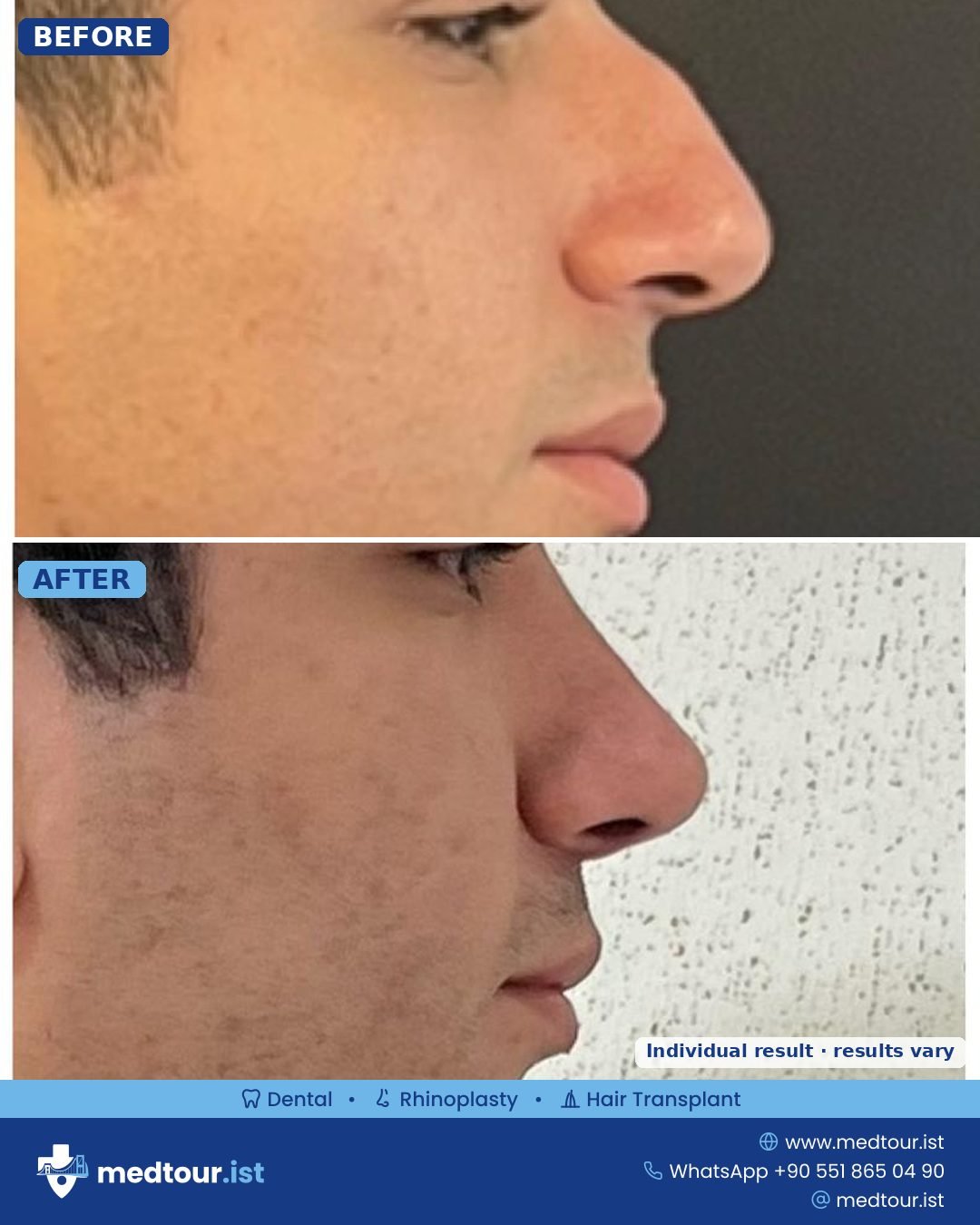
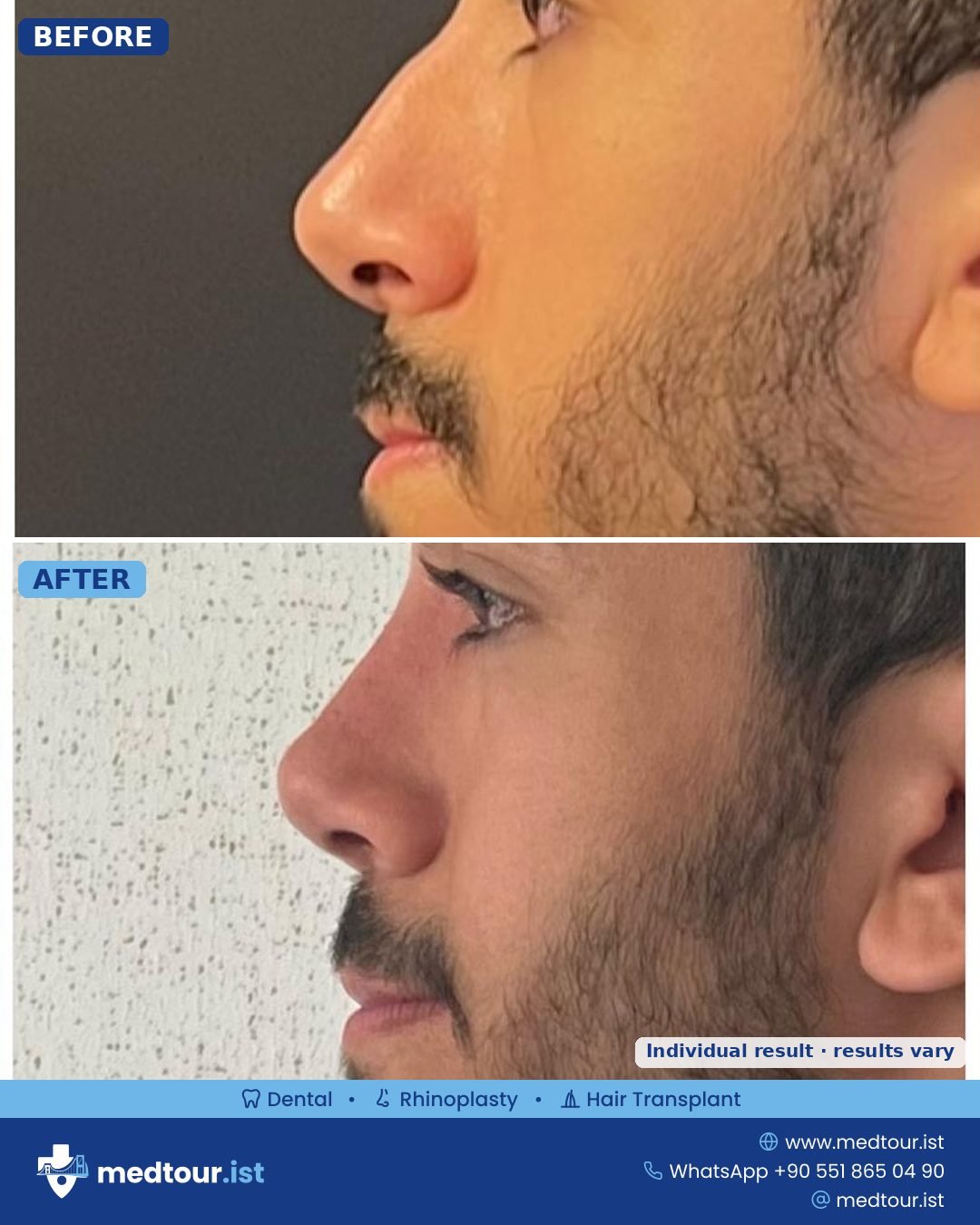
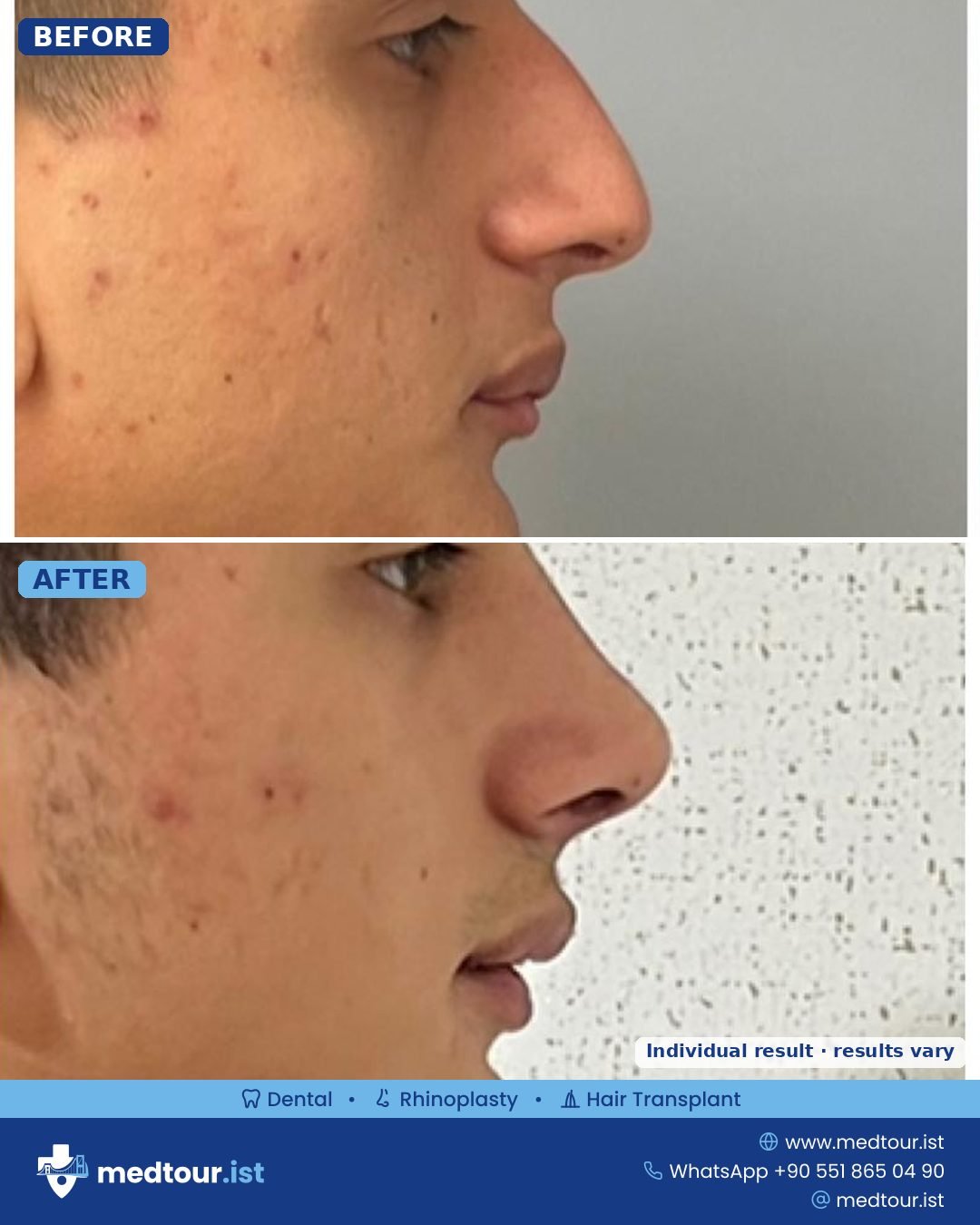
Real before-and-after photos from the surgeons I work with, published with patient consent. Faces are cropped for privacy. Every result is individual: the surgical plan depends on an in-person examination, and no result is guaranteed.
What May Be Discussed During Planning?
Patients often describe their concerns in everyday language. During a surgical consultation, these may be discussed more precisely.
- Bridge — the upper and middle line of the nose; patients may ask about a hump, curve, or profile line.
- Tip shape — concerns can include width, roundness, definition, or the position of the nasal tip.
- Projection & rotation — projection describes how far the tip comes forward; rotation describes how much it points upward or downward.
- Nostril & alar-base appearance — width, flare, or asymmetry may be part of the discussion.
- Deviation & breathing concerns — a nose or septum that is off-center may also be relevant when function is assessed.
These terms help describe goals; they do not determine which procedure is suitable. The surgeon decides what, if anything, should be treated.
Open, Closed, and Structural Support
Rhinoplasty can be performed using different surgical approaches. In an open rhinoplasty, a small external incision is made at the columella (the strip of skin between the nostrils); in a closed rhinoplasty, incisions are made inside the nostrils.
The choice of approach depends on the individual case and the surgeon’s assessment. In some cases, cartilage grafts may be considered to support or shape parts of the nose. Whether any graft is needed, and where it would come from, cannot be decided from general website information.
What Information May Be Needed?
To arrange a preliminary review, you may be asked for:
- Clear photos of your face and nose from relevant angles
- Whether you have had previous nose surgery or significant nasal injury
- Any breathing concerns
- Relevant medical conditions, regular medications, and allergies
- What you would like to change and what matters most to you
- Your preferred timeframe
You do not need to send detailed medical records in your first message. A remote review is preliminary. Suitability and the final surgical plan are confirmed by the treating surgeon after the appropriate clinical assessment.
Understanding Healing
Rhinoplasty healing is gradual. Swelling can make the nose look different at different stages, particularly around the tip and the area immediately above it. Skin thickness, healing tissue, and the type of surgery can also affect how quickly contours become clear.
Early appearance should therefore not be treated as the final result. Your surgeon should explain what to expect in your individual case, including aftercare, follow-up, and when changes should be assessed.
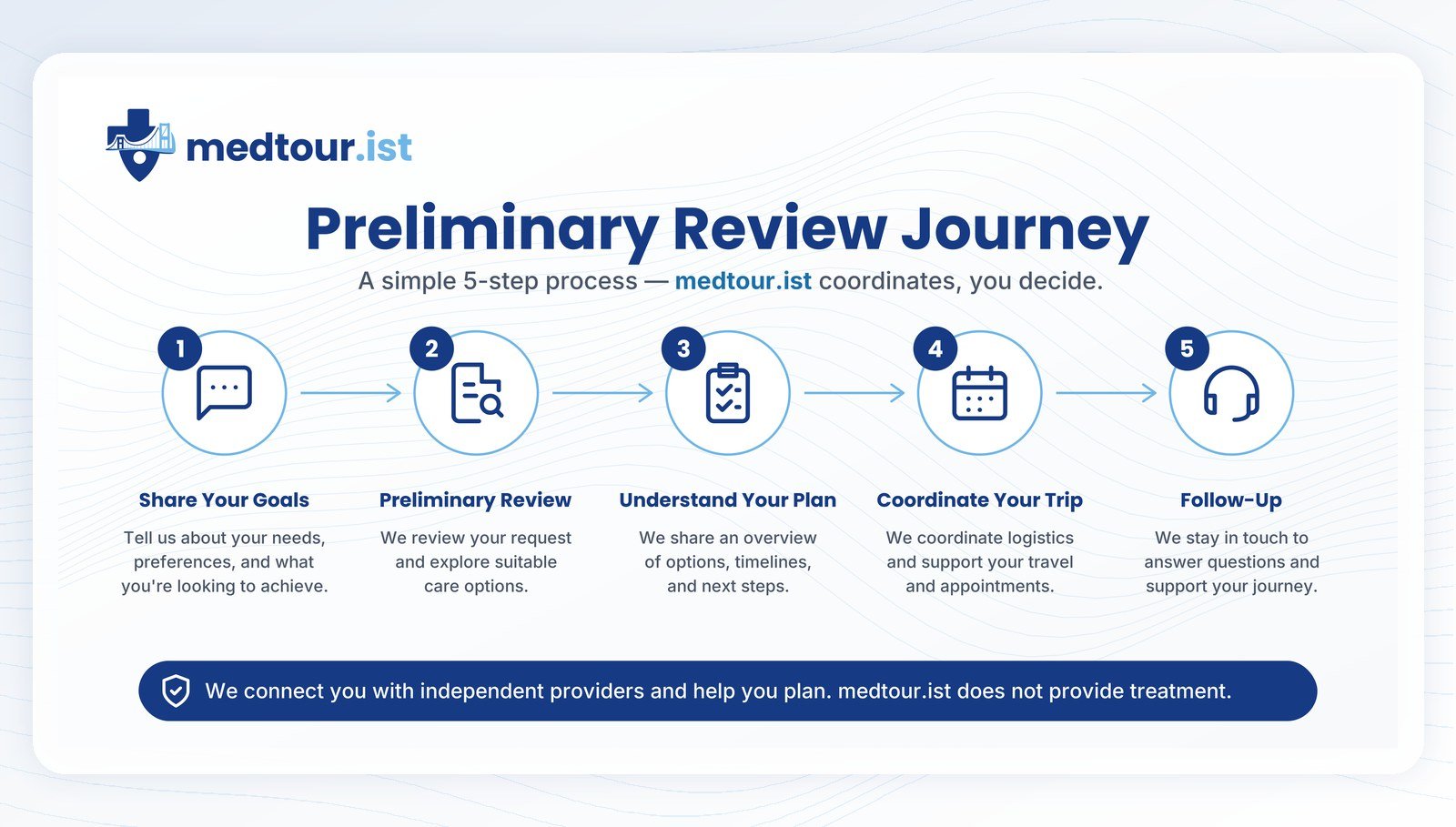
How the Istanbul Journey Works
A clear five-step process, grouped into three stages: share your goals, prepare for preliminary review, understand the proposed plan, coordinate your trip, and follow-up.

1 — Share Your Needs
Tell me about your goals through the form or WhatsApp.

2 — Preliminary Review
Where appropriate, your information is shared with a relevant surgeon for an initial review.
3 — Plan, Travel & Follow-up
You receive the available information and next steps. Once the medical plan and dates are confirmed, I help you plan the practical side of your trip and stay in touch afterward.
Questions Worth Asking Your Surgeon
A good surgeon welcomes questions. These help you compare options and make an informed decision.
- What training and experience do you have with this procedure, and how often do you perform it?
- Am I a suitable candidate, and what are the alternatives?
- What are the main risks for me, and how are complications handled?
- How long should I stay in Istanbul, and when can I fly home?
- Will you use cartilage grafts, and if so, from where?
- What do you expect to change with my breathing as well as the appearance?

Travel & recovery
Planning Your Trip
General guide before flying: 7–10 days after facial procedures
- Your surgeon decides how long you should stay in Istanbul after the procedure. I plan the trip around that advice, not the other way around.
- UK health guidance advises avoiding flights for 7 to 10 days after facial procedures. Your surgeon usually checks your nose, and removes any splint, before you fly.
- Swelling settles gradually, especially at the tip, so the final shape takes time to show.
- A treatment trip is not a holiday. Expect to rest, avoid alcohol, strong sun, swimming, and long sightseeing days while you recover.
- Ask before you book: where follow-up appointments take place, what happens if a complication occurs, and how aftercare is handled once you are home.
- Standard travel insurance usually does not cover complications from planned surgery. Check what the clinic and your own policy cover.
Based on NHS guidance on cosmetic surgery abroad.
Rhinoplasty FAQ
Primary vs. revision rhinoplasty?
Primary rhinoplasty is a first nose surgery. Revision rhinoplasty is surgery after a previous nose operation.
Can you tell me if I am suitable from photos?
Photos allow only a preliminary review. Suitability is decided by the surgeon after an in-person examination.
How long should I stay in Istanbul?
The required stay depends on the individual treatment plan and the treating provider’s instructions and should be confirmed before travel.
Can the result be guaranteed?
No. Results vary between individuals, and no medical result can be guaranteed.
What is the difference between tip rotation and tip projection?
Rotation describes whether the tip points more upward or downward. Projection describes how far the tip comes forward from the face.
Is open or closed rhinoplasty better?
There is no single approach that is best for everyone. The surgical approach depends on the individual case and the surgeon’s assessment.
Will cartilage grafts be needed?
Not necessarily. Cartilage support may be considered in some cases, but the need, amount, and source are individual surgical decisions.
Do previous surgery details matter for revision rhinoplasty?
Yes. Information about previous nasal surgery can be useful when preparing a revision case for preliminary review.
When can I fly home after rhinoplasty?
Your surgeon decides after checking your nose. As a general reference, NHS guidance advises avoiding flights for 7 to 10 days after facial procedures.

Start Your Rhinoplasty Journey
Tell me what you are considering. I can help you organize the information needed for a preliminary review and guide you through the next practical steps.