

Eyelid surgery
Eyelid Surgery (Blepharoplasty) in Istanbul
Heavy upper eyelids or under-eye bags can make you look tired. I help you understand blepharoplasty options, prepare for a preliminary review, and coordinate your visit to Istanbul.
Treatments I Can Help You Explore
Each option needs an individual assessment by a licensed surgeon.
Upper and Lower Eyelids
- Upper blepharoplasty — addresses excess skin and heaviness of the upper eyelids.
- Lower blepharoplasty — addresses under-eye bags and puffiness.
- Upper and lower combined — both eyelids planned in one procedure when suitable.
Related Options
- Almond eye (canthoplasty) — changes the shape of the outer corner of the eye.
- Brow lift — sometimes considered together when the brow line is low.
Good to Know
With age, the skin of the upper eyelids can stretch and fat can bulge into the lower lids, which can make you look tired. In some people, heavy upper lids can also narrow the upper and outer field of vision. Blepharoplasty can address excess skin, muscle, and fat, but which eyelids are treated, and how, is decided by your surgeon after an examination.
Eyelid Surgery Results
Real before-and-after photos of eyelid surgery, shared with patient consent. Only the eye area is shown to protect privacy. Every result is individual: suitability and the final plan depend on an in-person examination by your treating surgeon, and no result is guaranteed.
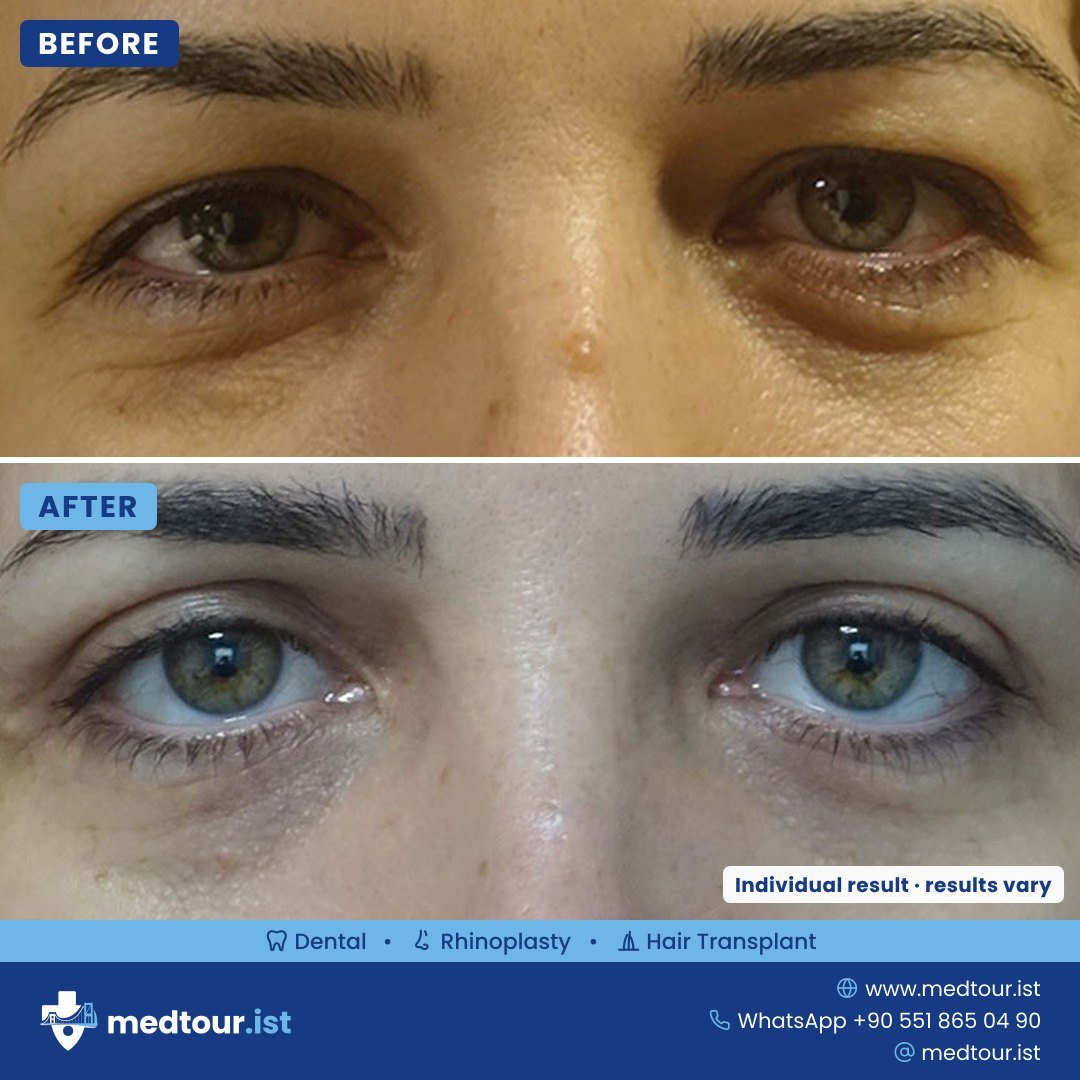
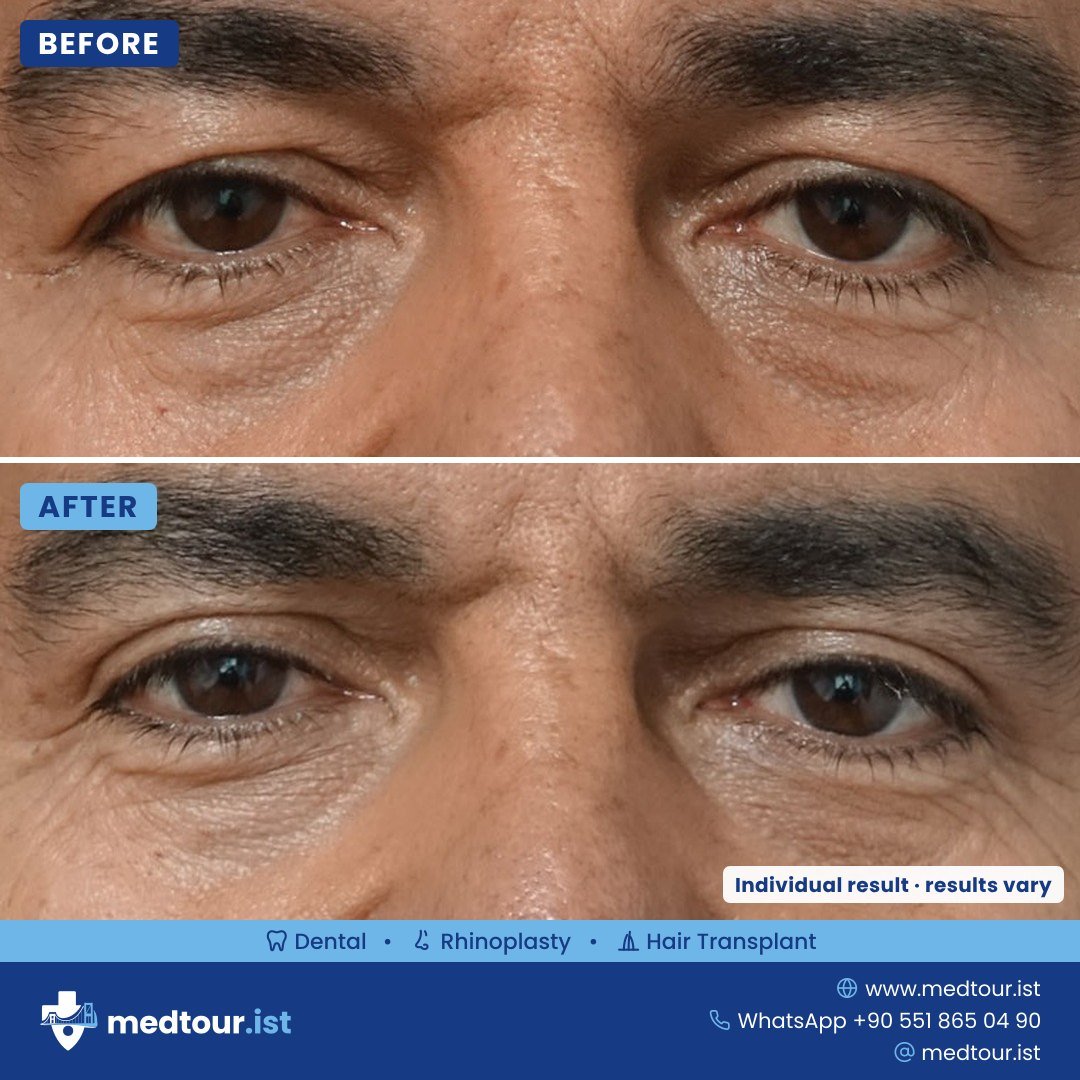
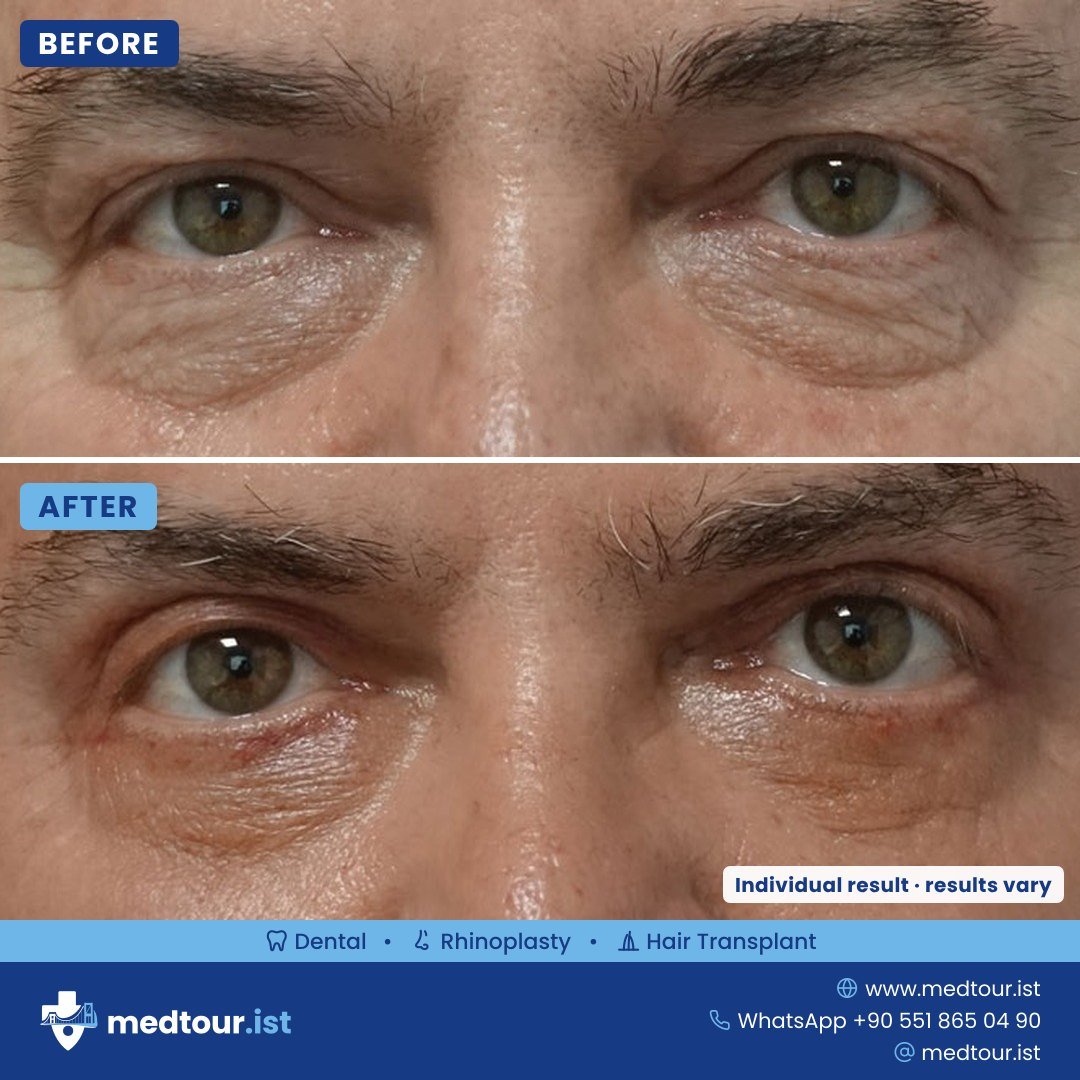
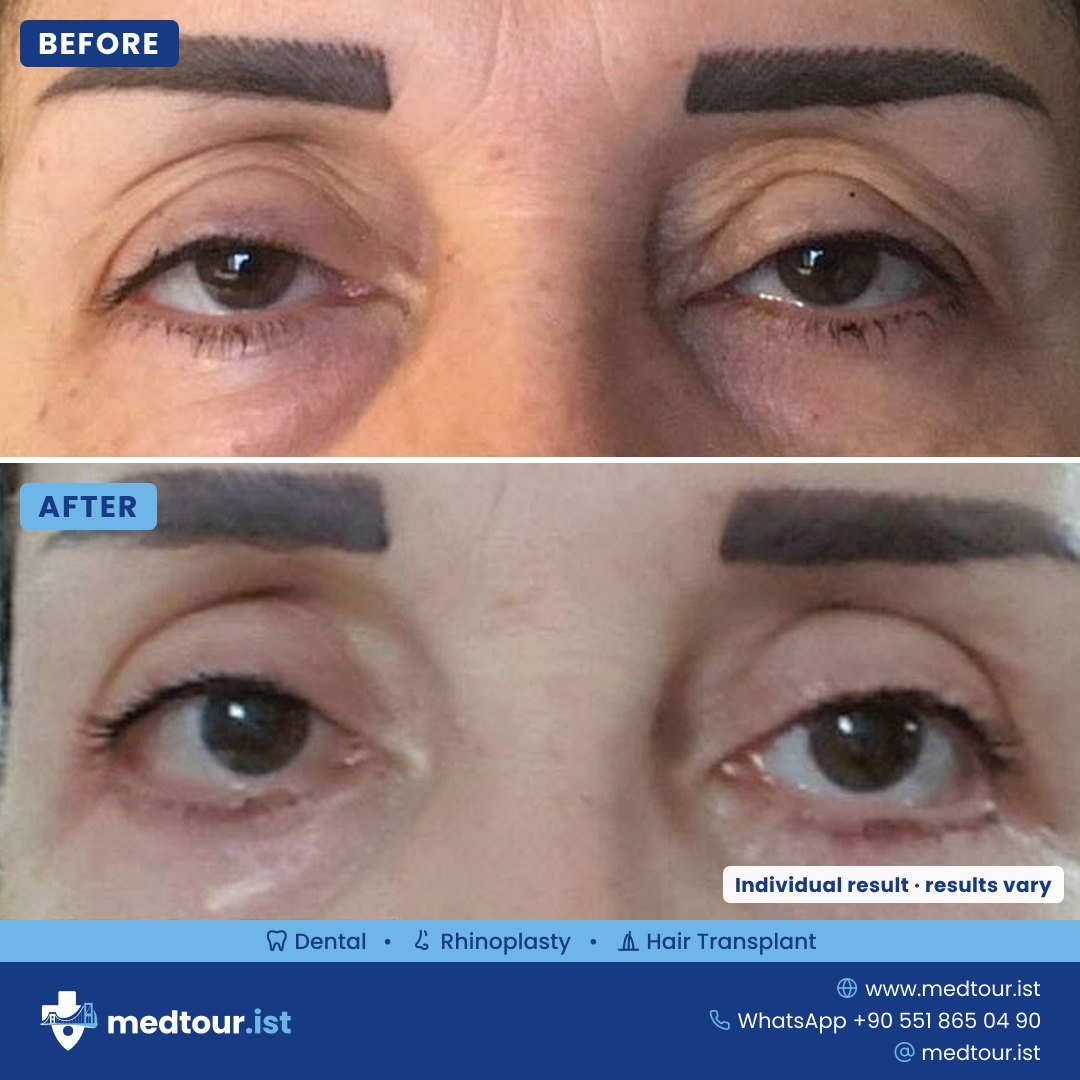
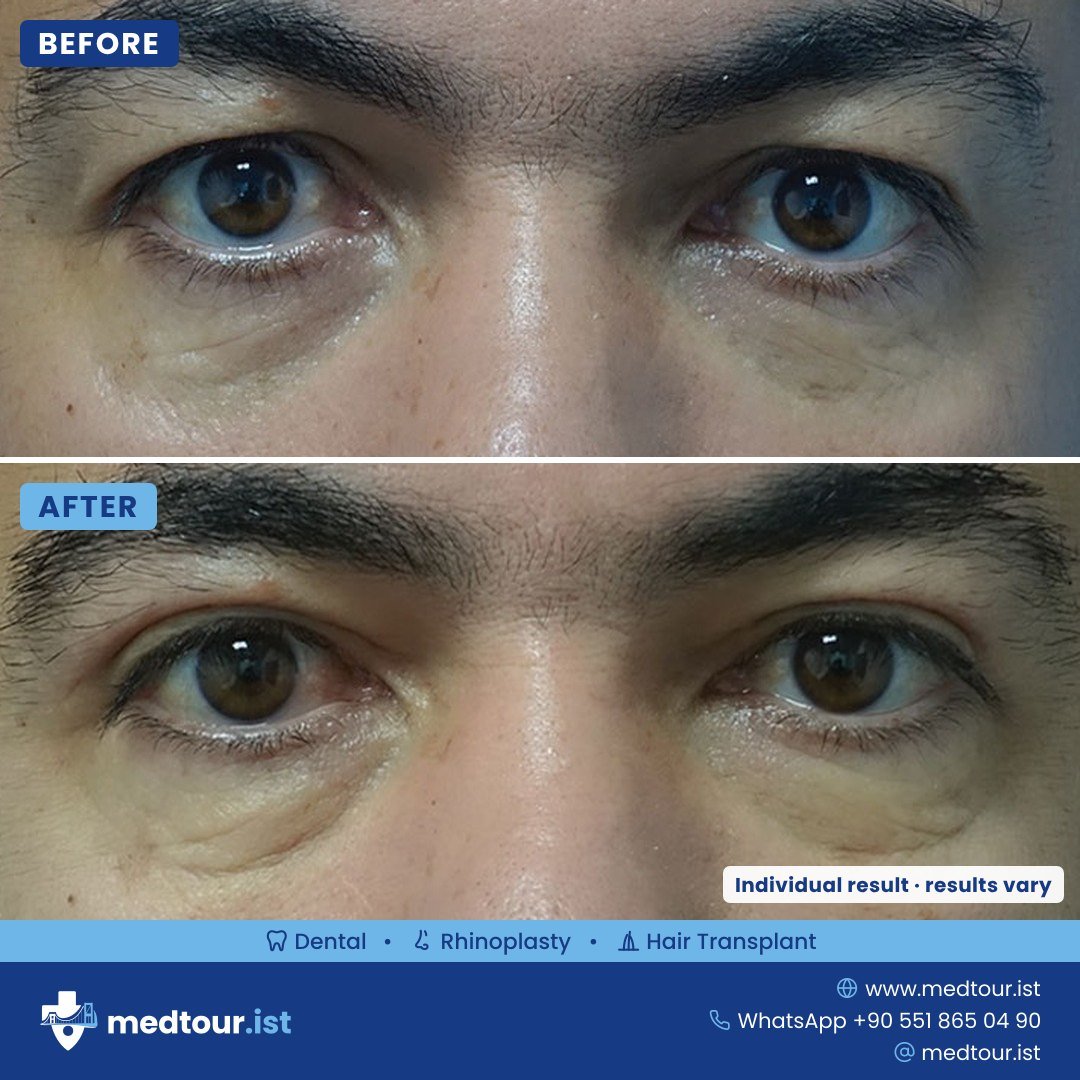
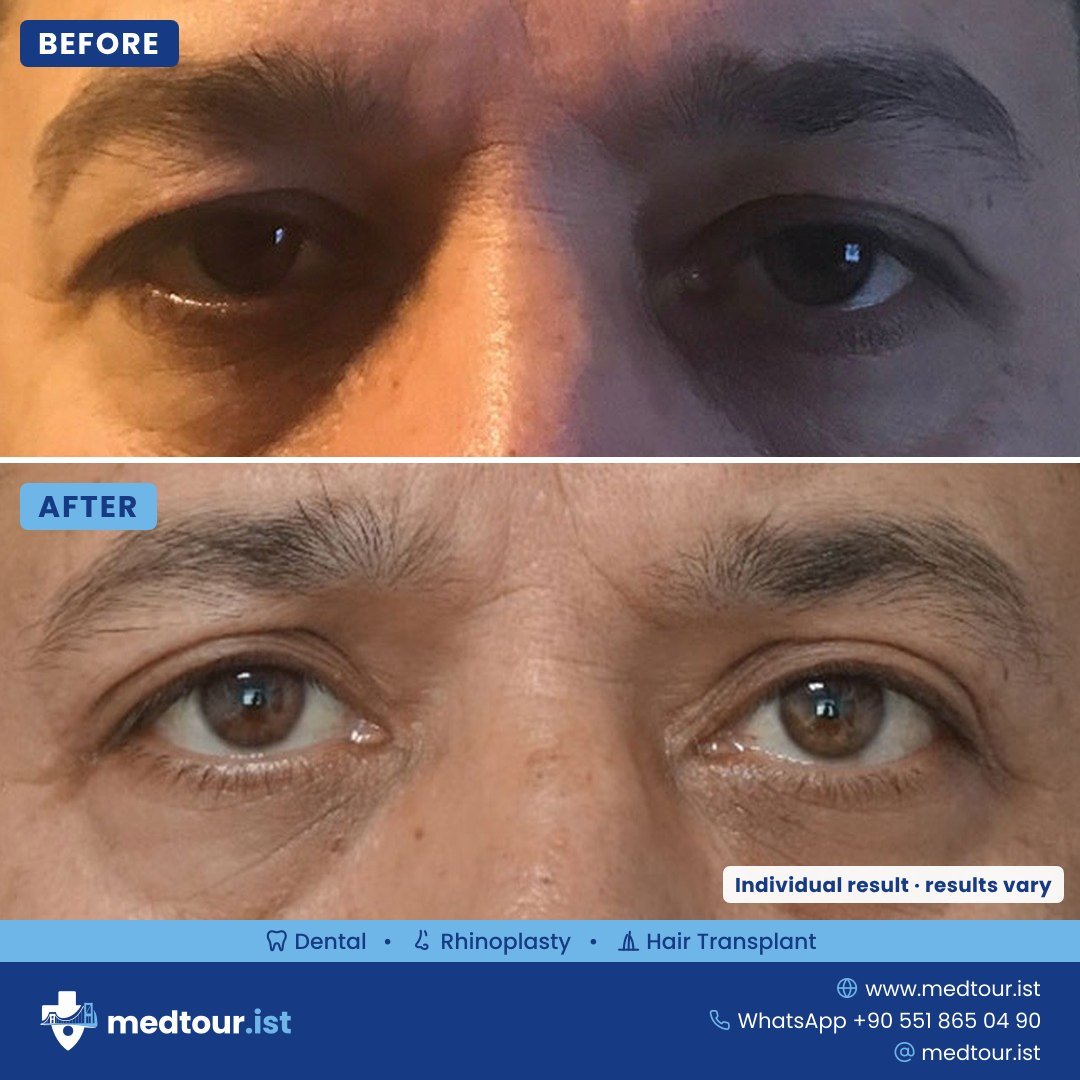
Upper and Lower Eyelid Surgery Explained
Upper Blepharoplasty
Removes excess skin and, if needed, a small amount of fat from the upper lids. It can freshen a tired look, and when heavy skin limits the upper field of vision, it may also help sight.
Lower Blepharoplasty
Treats under-eye bags and loose skin. Depending on the case, fat is removed or repositioned, sometimes through an incision inside the lower lid so no visible scar remains on the skin.
Combined and Related Options
Upper and lower lids can be treated together. If the brow has also dropped, a surgeon may suggest a brow or temple lift instead of, or as well as, eyelid surgery.
Preparing for Your Preliminary Review
The more complete your first message is, the more useful the surgeon’s preliminary opinion can be. You decide what to share, and everything is handled confidentially.
- Clear photos of your eyes looking straight ahead, with eyes open and closed, and from both sides, without makeup or glasses
- Any eye conditions, such as dry eyes, glaucoma, or thyroid eye disease, and recent eye tests
- Whether you wear contact lenses or have had laser eye surgery
- Your general health, any long-term conditions, and medicines or supplements you take
- Previous operations, especially in the same area
- Whether you smoke or vape, since smoking slows healing and many surgeons ask you to stop before and after surgery
- Your preferred travel dates, so planning can start early
Travel & recovery
Planning Your Trip
General guide before flying: 7–10 days after facial procedures
- Your surgeon decides how long you should stay in Istanbul after the procedure. I plan the trip around that advice, not the other way around.
- UK health guidance advises avoiding flights for 7 to 10 days after facial procedures. Your surgeon may also plan stitch removal before you travel.
- Bring sunglasses; swelling and bruising around the eyes are common in the first days.
- A treatment trip is not a holiday. Expect to rest, avoid alcohol, strong sun, swimming, and long sightseeing days while you recover.
- Ask before you book: where follow-up appointments take place, what happens if a complication occurs, and how aftercare is handled once you are home.
- Standard travel insurance usually does not cover complications from planned surgery. Check what the clinic and your own policy cover.
Based on NHS guidance on cosmetic surgery abroad.
Questions Worth Asking Your Surgeon
A good surgeon welcomes questions. These help you compare options and make an informed decision.
- What training and experience do you have with this procedure, and how often do you perform it?
- Am I a suitable candidate, and what are the alternatives?
- What are the main risks for me, and how are complications handled?
- How long should I stay in Istanbul, and when can I fly home?
- Is my main concern skin, fat, or a low brow, and which technique fits that?
How I Help
Three clear steps, from your first message to follow-up.

1 — Share Your Goals
Tell me which treatment you are considering and, if you wish, share photos or medical reports.

2 — Preliminary Review
A licensed surgeon reviews your information and shares a preliminary opinion. This is not a diagnosis; the final plan follows an in-person examination.

3 — Plan, Travel, Follow-Up
If you decide to go ahead, I help organize appointments, share practical guidance on transfers and accommodation, and stay in touch after you return home.
More Eyelid Surgery Questions
Will the scars be visible?
Upper eyelid incisions are usually placed in the natural crease, so the scar is generally hidden when your eyes are open. Lower eyelid incisions are made just below the lashes or on the inner surface of the lid, depending on the technique.
What is recovery like?
Bruising and swelling are common at first and can take several weeks to settle. Your surgeon gives you specific aftercare instructions.
Can eyelid surgery be combined with other procedures?
In some cases, blepharoplasty is planned together with a brow lift or other facial procedures. Whether this is suitable is decided by your surgeon.
Can upper and lower eyelid surgery be done together?
Yes, both lids are often treated in the same session when a surgeon finds it suitable. It can affect recovery, so ask how long you should stay in Istanbul.
Will eyelid surgery leave visible scars?
Upper-lid incisions usually sit in the natural eyelid crease, and some lower-lid techniques use an incision inside the lid. Scars typically fade over time, but healing differs from person to person.
Important
Eyelid procedures are medical decisions. Suitability, the final plan, and recovery are determined by the treating surgeon after an in-person examination. medtour.ist coordinates and guides; it does not provide medical treatment, and no result is guaranteed.

Ready to Explore Your Options?
Tell me which treatment you are considering. I’ll help you understand what information is needed and guide you toward the appropriate next step.