

Face guide
Facelift in Istanbul, Turkey: Classic, Endoscopic, or Mid Facelift
A facelift lifts loose skin and deeper tissues of the face and neck. The type that suits you depends on where you see changes and what your surgeon finds at your examination.
Facelift Types Compared
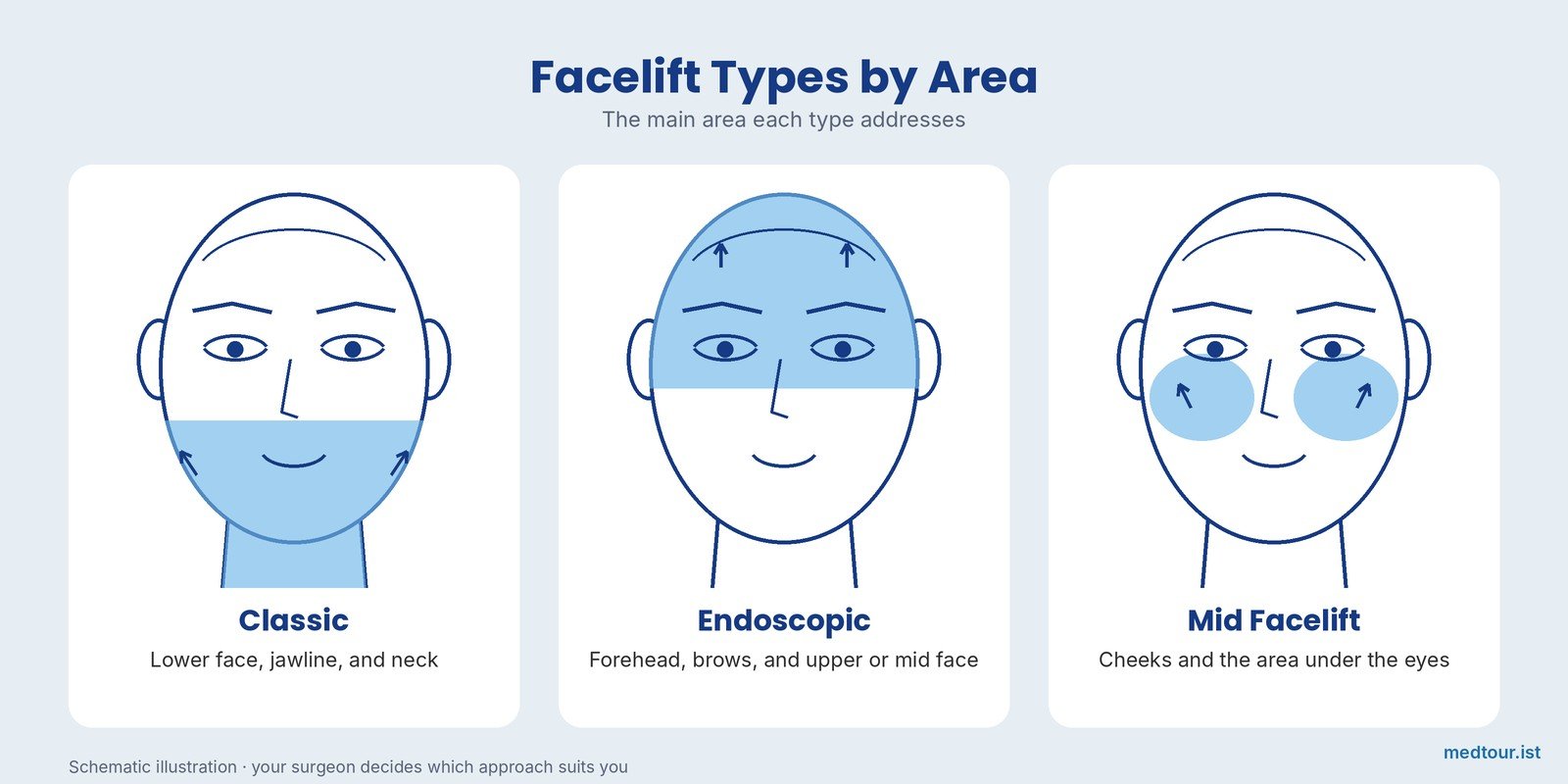
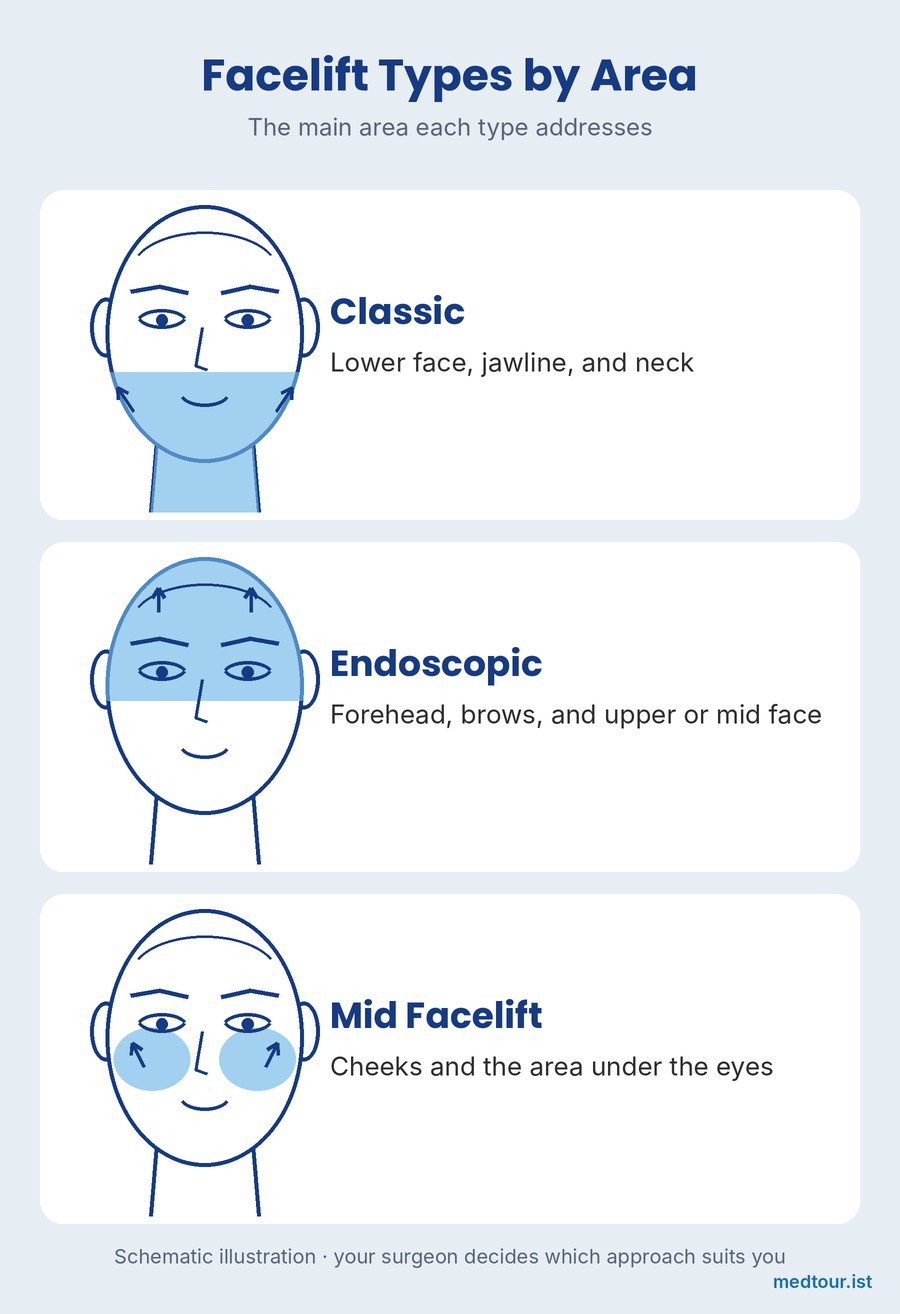
| Classic | Endoscopic | Mid facelift | |
|---|---|---|---|
| Main area | Lower face, jawline, and neck | Forehead, brows, and upper or mid face | Cheeks and the area under the eyes |
| Incisions | Around the ears, often into the hairline | Small incisions hidden in the hairline | Small incisions, often in the hairline, inside the mouth, or at the lower eyelid, depending on technique |
| Often combined with | Neck lift, fat transfer | Brow, temporal, or fox eye lift | Eyelid surgery |
Some clinics offer “5 in 1” packages that combine several of these steps. We explain them on our Facial Surgery page.
Recovery Basics
- Swelling, bruising, and tightness are common in the first weeks.
- Numbness in the cheeks or around the ears can take weeks to months to settle.
- Most surgeons check the stitches before you fly.
- Results keep refining over several months.
Recovery times vary from person to person. These are common ranges, not promises; your provider’s instructions take priority.
Risks to Discuss
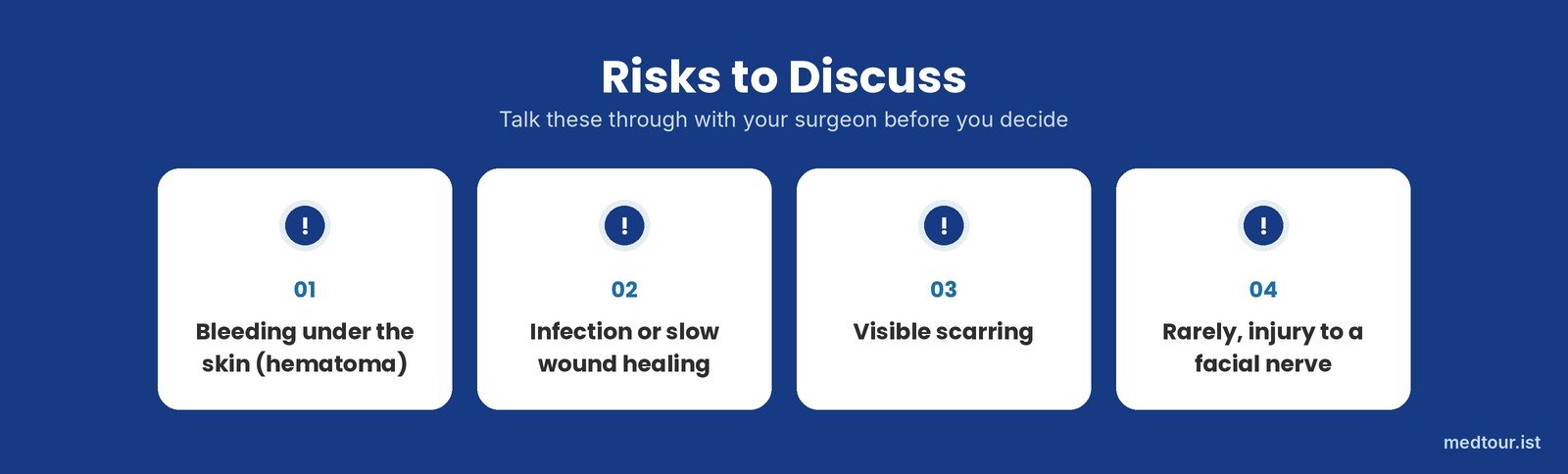
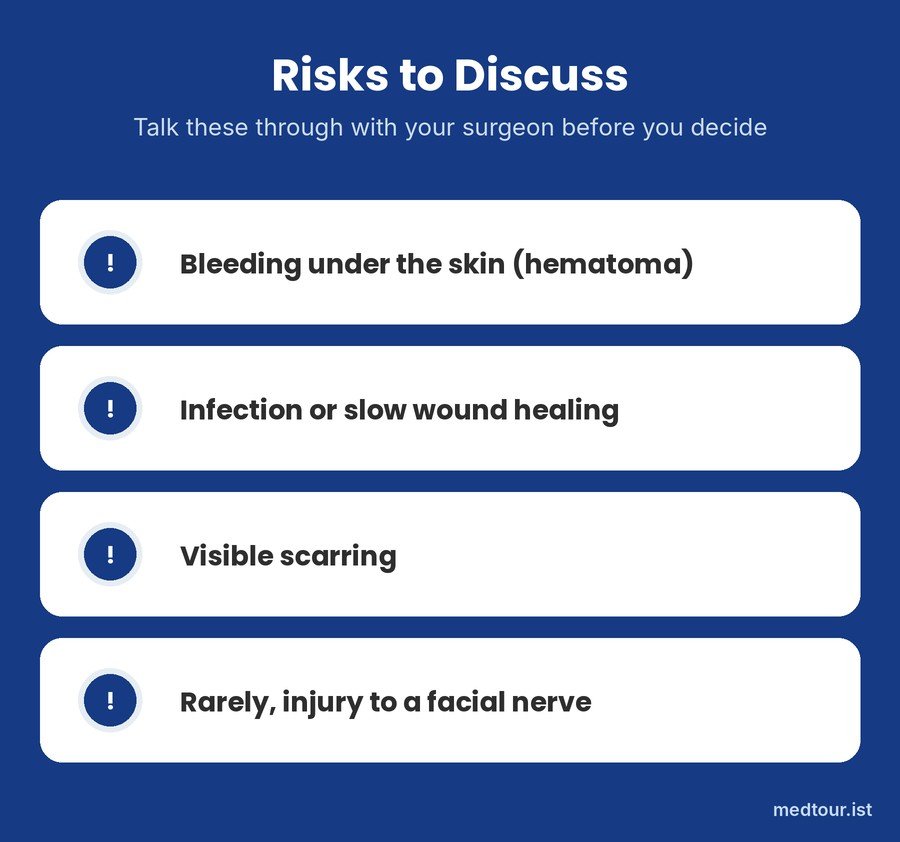
- Bleeding under the skin (hematoma).
- Infection or slow wound healing.
- Visible scarring.
- Rarely, injury to a facial nerve.
Your surgeon explains how these risks apply to you.
What Affects the Plan and Cost
- Type of facelift and combined procedures.
- Anesthesia and hospital stay.
- First surgery or revision.
- Length of stay, garments, and follow-up visits.
We do not publish prices. Ask for a written plan that lists what is included.
Questions Worth Asking
- Which type of facelift suits me, and why?
- Where will the scars be?
- How many nights will I stay in hospital?
- When can I fly home, and who follows up?
Interested in the upper face only? Read our fox eye, temporal, and brow lift guide.
Facelift Results
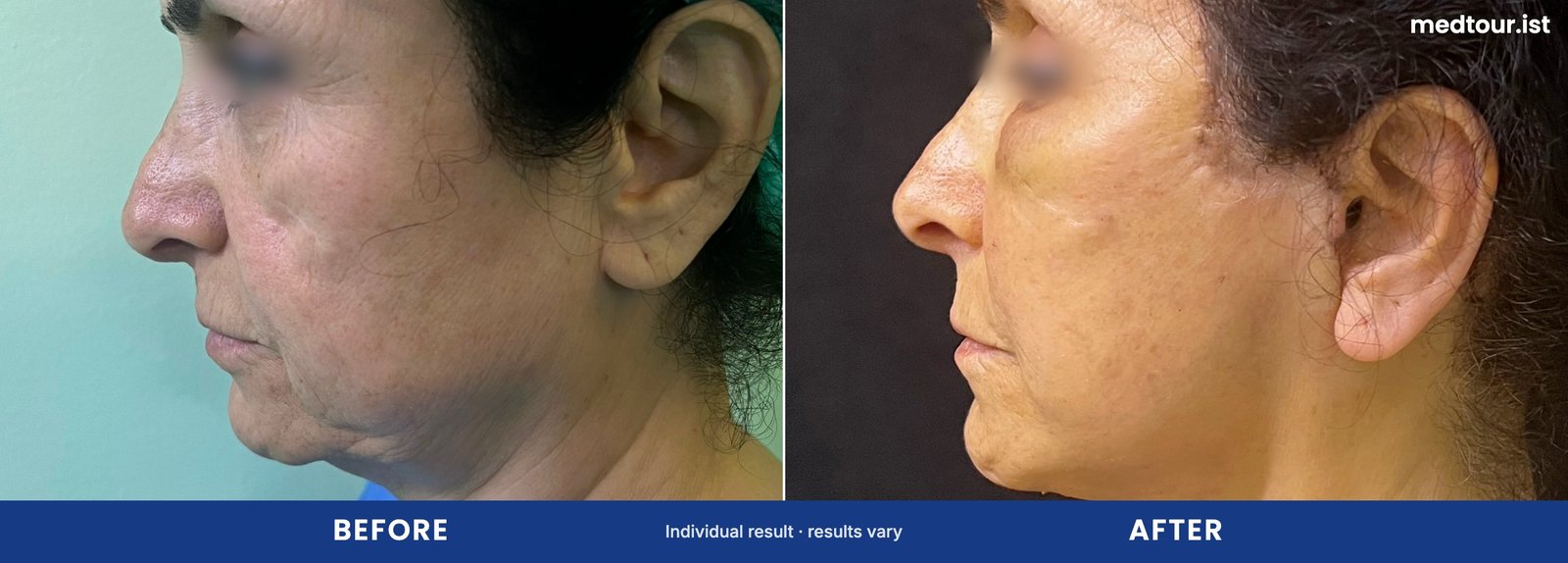
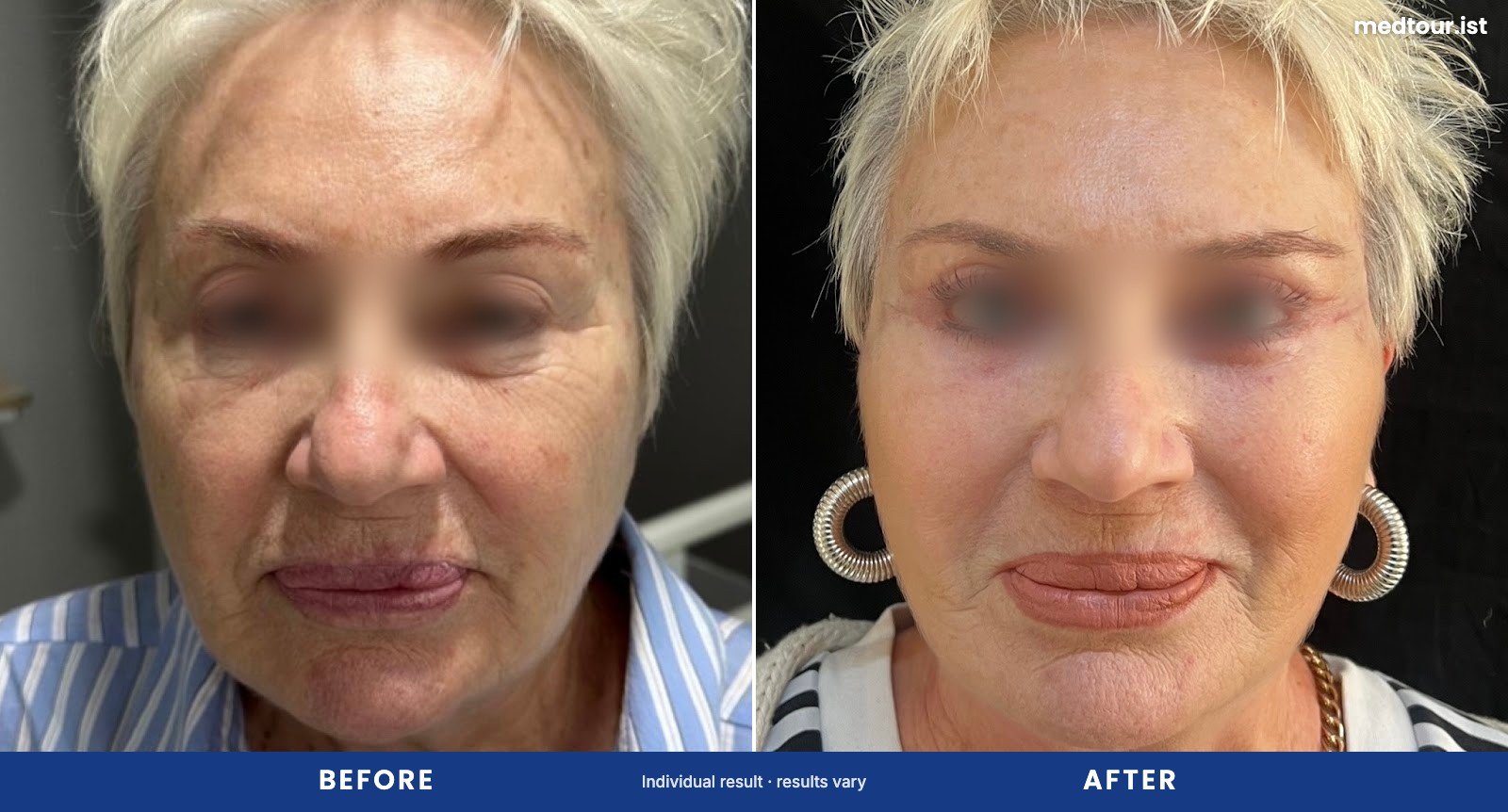
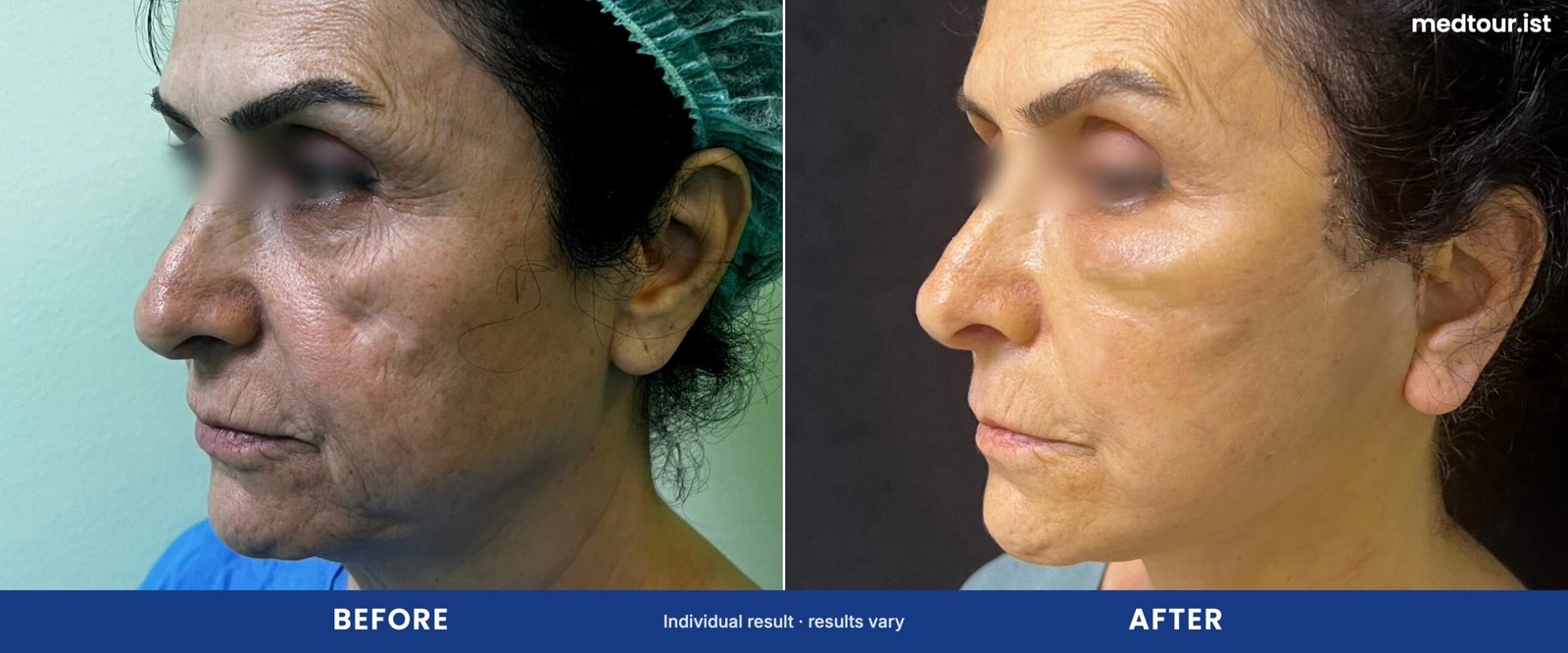
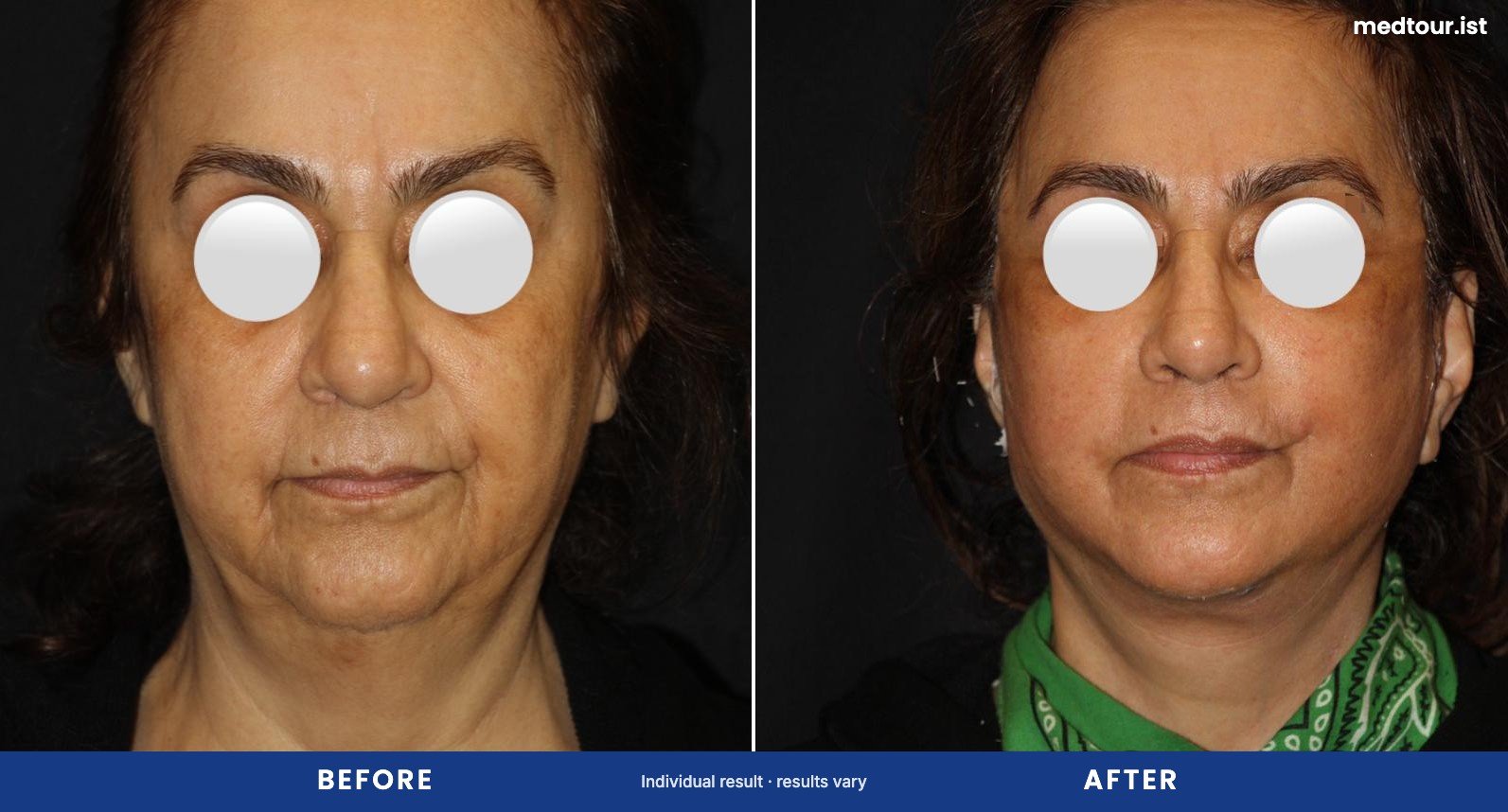
Real before-and-after photos of deep plane face and neck lifts, shared with patient consent. The eyes are blurred or covered to protect privacy. Every result is individual: suitability and the treatment plan depend on an in-person assessment by your treating surgeon, and no result is guaranteed.
Facelift FAQ
How long does a facelift last?
A facelift can give a long-lasting improvement, but your face continues to age naturally. Results cannot be guaranteed.
What is the difference between a facelift and a mid facelift?
A classic facelift mainly treats the lower face and neck. A mid facelift focuses on the cheeks and the area under the eyes.
Am I too young for a facelift?
Age alone does not decide it. Your surgeon looks at your skin, tissues, and goals.
Content last reviewed: October 2026. General information only; it does not replace an examination by a surgeon.

Understand Your Facelift Options
Share a few photos, and we will guide you through a preliminary review with a surgeon.