

Eyelid guide
Eyelid Surgery (Blepharoplasty) Recovery: Week by Week
Eyelid surgery recovery is usually short but visible. Swelling and bruising are strongest in the first days, stitches are often removed around one week, and many people take about two weeks off work. Lower eyelid surgery usually means more swelling than upper. Your surgeon decides when you can fly, wear contact lenses, or use eye makeup.
Upper vs. Lower Blepharoplasty
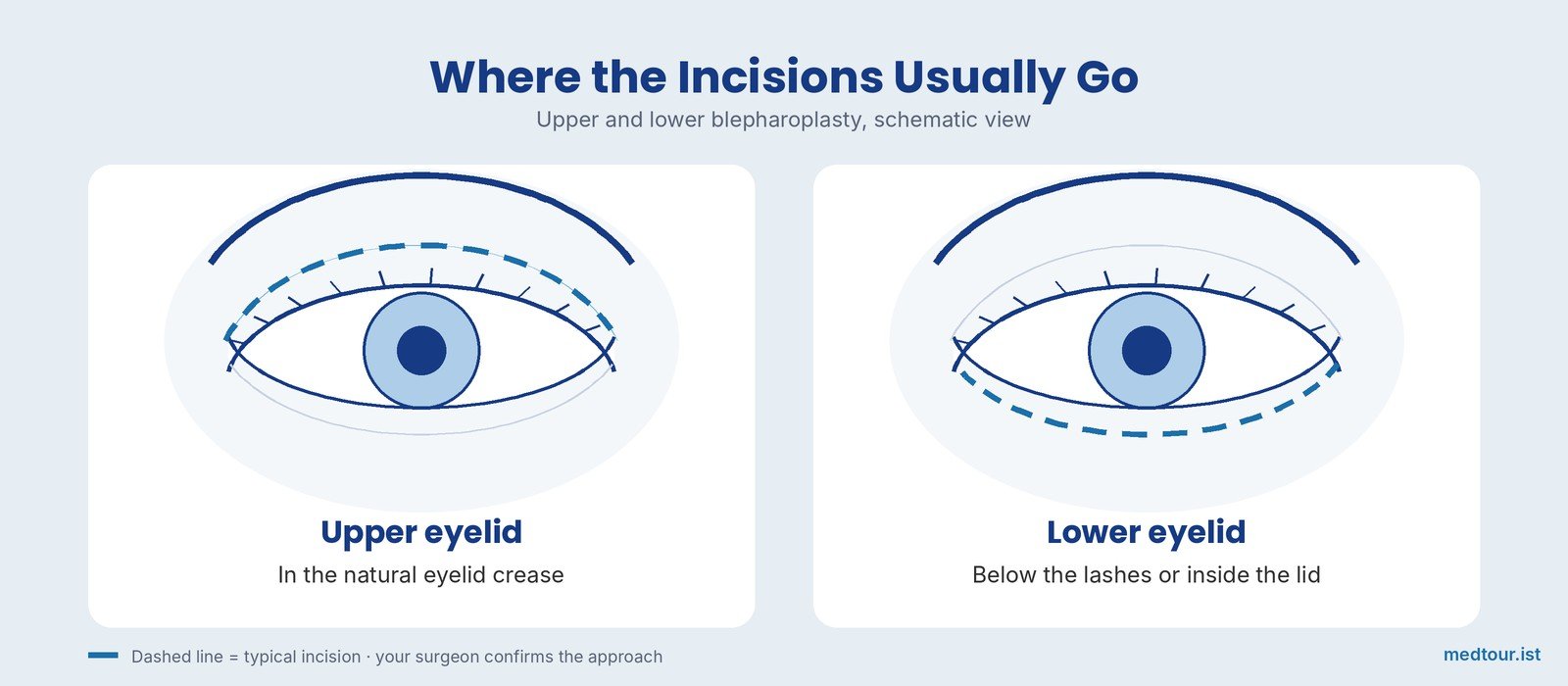
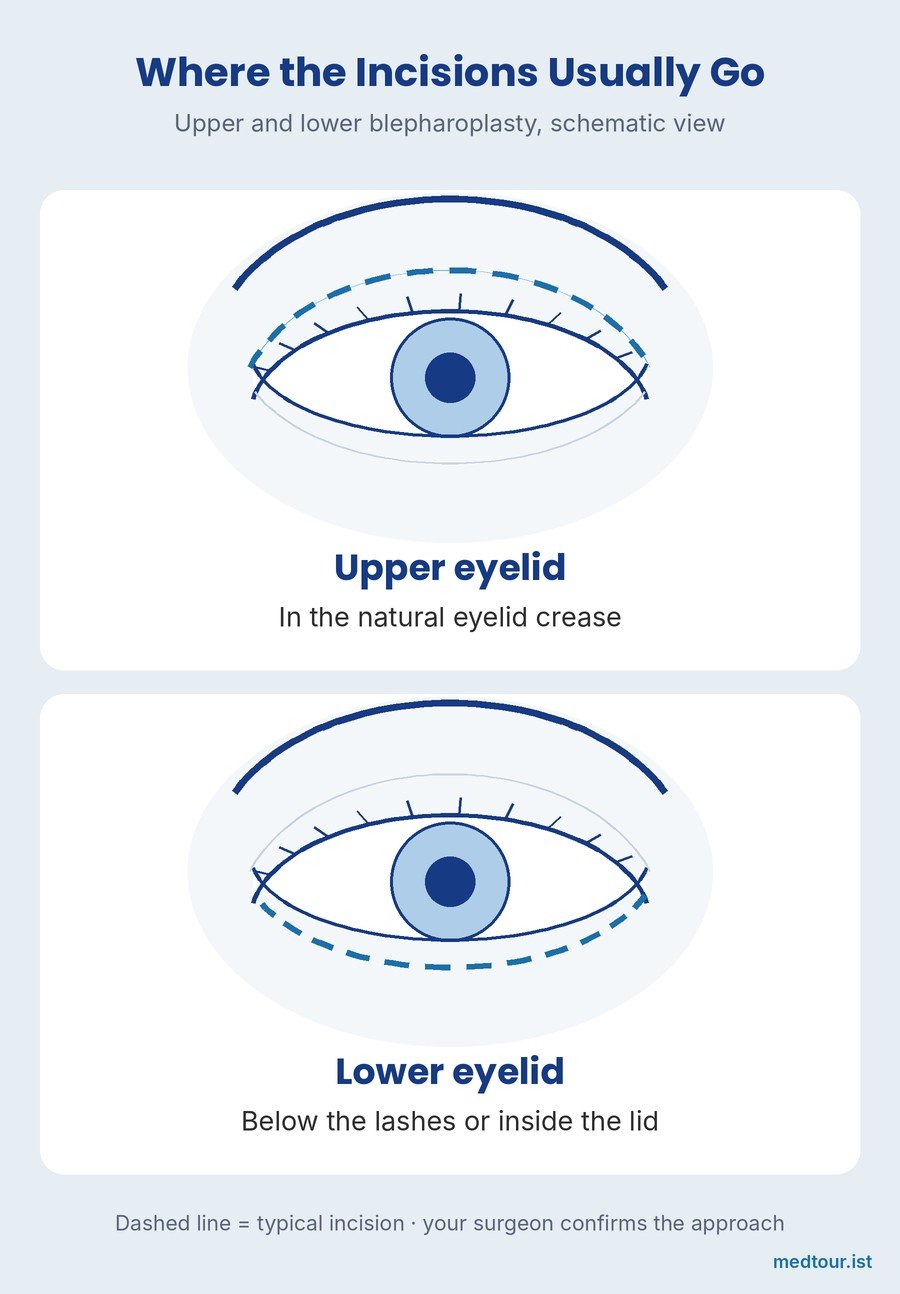
| Upper eyelid | Lower eyelid | |
|---|---|---|
| Incision | In the natural eyelid crease | Below the lashes or inside the lid |
| Anesthesia | Often local | Local or general, depending on the plan |
| Swelling | Usually milder | Usually more, can last longer |
| Also checked | Brow position | Eye surface swelling can last weeks |
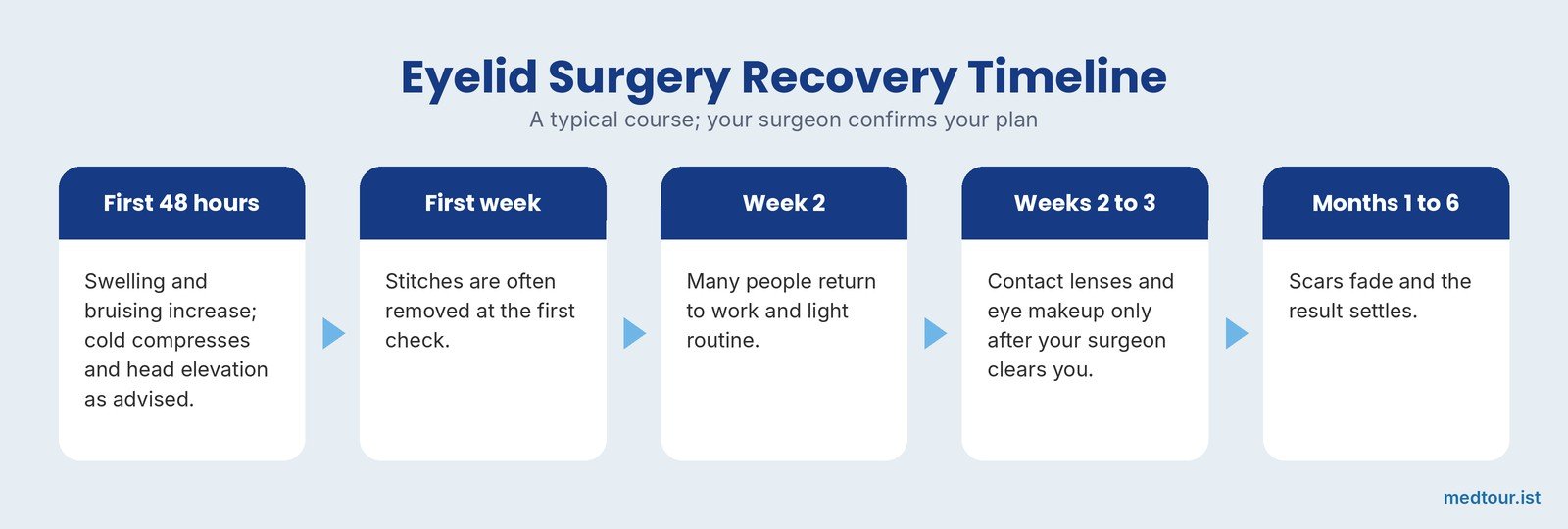
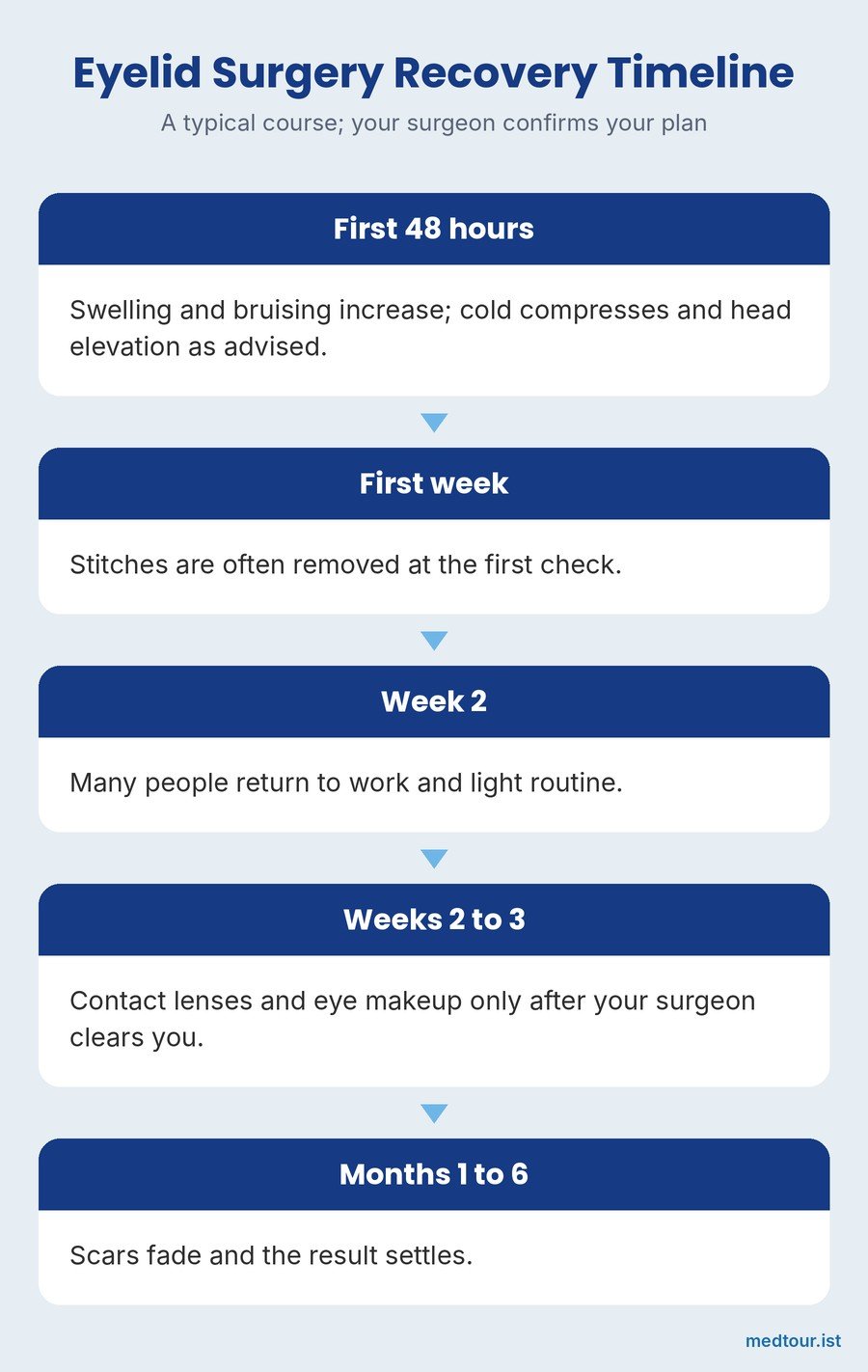
Recovery Timeline
- First 48 hours: swelling and bruising increase; mild discomfort; cold compresses and head elevation as advised.
- First week: stitches are often removed at the first check.
- Week 2: many people return to work and light routine.
- Weeks 2 to 3: contact lenses and eye makeup only after your surgeon clears you.
- Months 1 to 6: scars fade and the result settles.
When Can I Fly Home?
- Most international patients plan to stay until the first check and stitch removal.
- The exact day depends on the type of surgery and your healing.
- Your surgeon confirms it before you book your flight.
Red Flags After Surgery
- Sudden or increasing pain
- Vision changes
- Bleeding that does not stop
- Signs of infection: increasing redness, warmth, or discharge
- If any of these happen, contact your surgeon at once.
Questions to Ask Before Surgery
- Do I need upper, lower, or both, or is my concern the brow?
- Local or general anesthesia?
- When will stitches come out, and when can I fly?
- When can I use contact lenses and makeup?
- Who follows me up after I return home?
Read more on our eyelid surgery page, the fox eye, temporal, and brow lift guide, the facelift guide, where to stay during treatment, and our safety and aftercare checklist.
Eyelid Recovery FAQ
Is eyelid surgery painful?
Most people describe mild discomfort for a day or two, managed with simple pain relief your surgeon recommends.
When will I look presentable?
Bruising usually settles over about two weeks; this varies from person to person.
Can I wear glasses?
Usually yes; contact lenses wait for your surgeon’s approval.
Will the scar show?
Upper eyelid scars usually sit in the natural crease and fade over months.
Can eyelid surgery be combined with a brow or temporal lift?
Sometimes. Combining procedures changes recovery; see our fox eye, temporal, and brow lift guide.
Content last reviewed: October 2026. General information only; your surgeon gives your personal recovery plan.

Plan Your Eyelid Surgery With Confidence
Share a few photos, and we will guide you through a preliminary review and a written plan, including recovery days.